Buy a moka pot for strong, espresso-style coffee at about $50, mostly with milk. Buy an espresso machine for real espresso with crema, at $150 to $500 plus a grinder. That’s the moka pot vs espresso machine call for most kitchens.
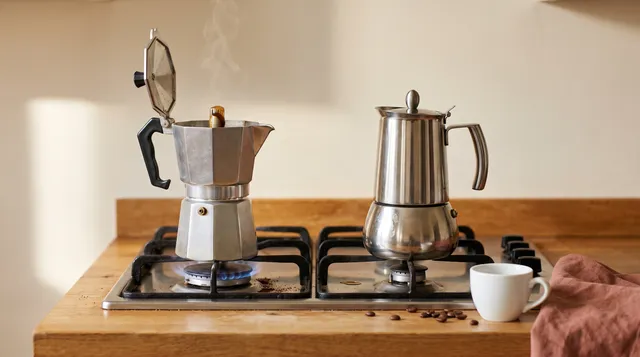
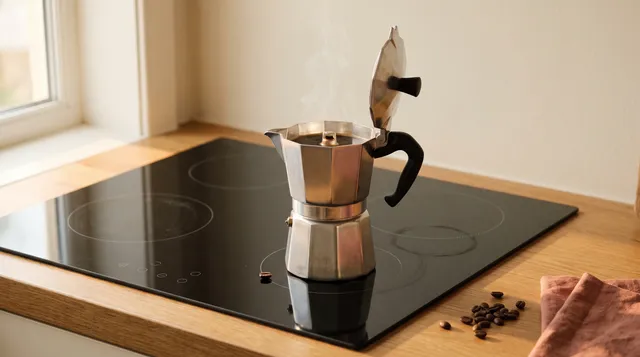
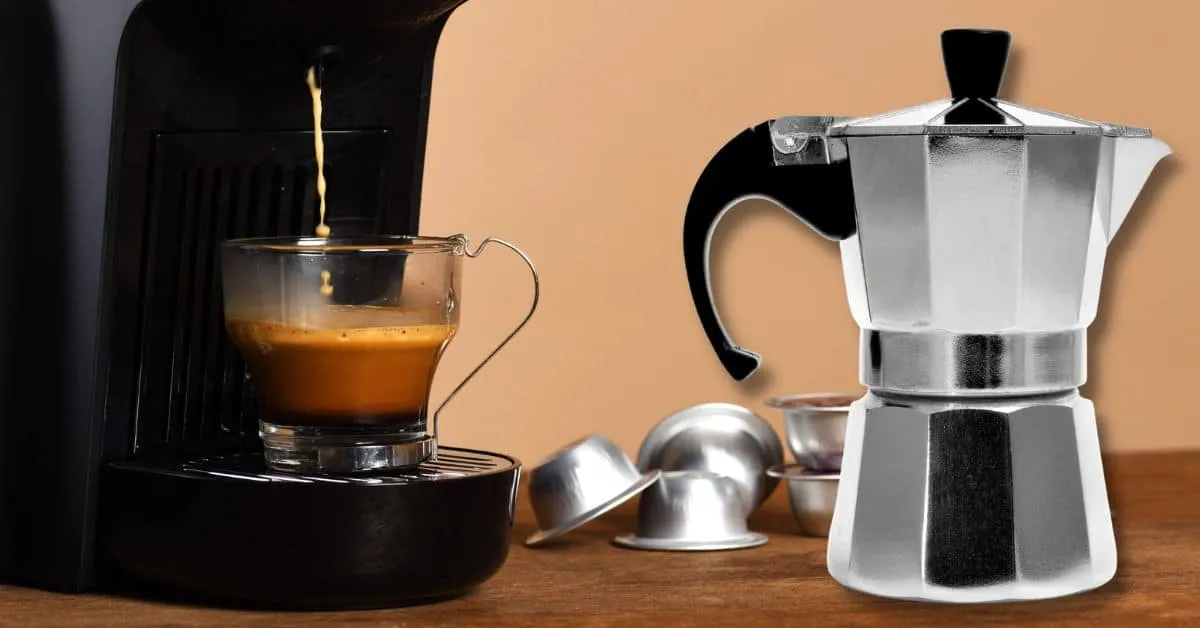
A moka pot sits on your stove and uses steam to push water up through the coffee. An espresso machine uses a pump to force water through it at about 9 bar. Same idea on paper, very different cup.
Full disclosure: my coffee comes off a Nespresso Vertuo Up. I don’t own a moka pot or a pump espresso machine, and I’m not going to pretend otherwise. This page is built from Bialetti’s and Breville’s own specs, lab research that measured both brewers, and a lot of owner threads.
Where I’m speaking from my own kitchen, I’ll say so.
Moka pot vs espresso machine at a glance
| Moka pot | Espresso machine | |
|---|---|---|
| How it brews | Steam pressure in the bottom chamber pushes water up through the coffee | A pump forces hot water through tamped coffee |
| Pressure | A few bar at most | About 9 bar |
| Brew time | 3 to 6 minutes on the stove | Under a minute per shot. The Bambino heats up in 3 seconds |
| What one brew makes | About 9 oz from a 6-cup Bialetti | About 1 oz per single shot |
| Crema | None, a thin foam at best | Yes |
| Grind | Fine, about table salt. Don’t tamp it | Finer, adjusted shot by shot. Tamped |
| Grinder needed? | No, pre-ground moka coffee is easy to buy | Strongly advised, though some baskets take pre-ground |
| Milk | Needs a separate frother | Most have a steam wand |
| Upkeep | Rinse, swap the gasket now and then, descale only in hard water | Rinse the basket, purge the steam wand, descale on the manual’s schedule |
| Power | A stove or a camp fire | An outlet |
| Price | About $50 | $150 to $500, plus a grinder |
The moka numbers come from the 6-cup Bialetti Moka Express. The machine numbers come from Breville’s spec page for the Bambino, which pulls its shots at 9 bar from a 15 bar pump and heats up in 3 seconds. Prices checked October 2026.
A moka “cup” is a small espresso cup of about 1.5 oz, not a mug. That catches out a lot of first-time buyers.
If you already know which camp you’re in, these are the two I’d buy. The Bialetti is the original that every other moka pot copies, and our best stovetop espresso maker picks cover the alternatives. The Bambino is the cheapest machine I’d point a beginner at, because it has a real steam wand and baskets that forgive pre-ground coffee.
- Makes about 9 fl oz (270 ml) of concentrated coffee per brew
- Aluminum body with the patented Bialetti safety valve
- Works on gas and electric; induction only with Bialetti's adapter plate
Pros
- Strong enough to stand up to milk for lattes and cappuccinos
- Spent grounds knock out as a dry puck
- No glass to break, so it survives camping trips
Cons
- Not dishwasher safe; hand wash only
- Not induction ready without the separate adapter
- A 6-cup makes 6 small espresso-size cups, not 6 mugs
- ThermoJet heating reaches brewing temperature in 3 seconds
- Single-wall and dual-wall baskets, so pre-ground coffee works
- Manual steam wand for hand-textured milk
Shopping for the Bialetti vs an espresso machine is really a question about how you drink your coffee. The rest of this page answers that.
Is moka pot coffee espresso?
No. A moka pot brews at a few bar of steam pressure. Espresso needs about 9.
In lab tests, the boiler of a stovetop moka pot peaked at only a few bar, and water started moving up through the grounds at around 158°F (70°C). That changes three things:
- Pressure. A few bar can’t push water through coffee packed as fine and tight as an espresso puck. So the grounds sit looser and the water takes longer.
- Temperature. The pot keeps heating on the stove while it brews, so the last of the coffee comes through hotter than the first. Leave it on too long and it tastes burnt.
- The cup. Thinner body than espresso, little or no crema, and more bitterness.
So why does everyone call it “stovetop espresso”? Because it’s strong, it’s small, and it comes out of an Italian pot that looks the part. Bialetti itself sells it as a stovetop espresso maker. That’s marketing, not chemistry.
None of that makes moka coffee bad. It just makes it a different drink. If you want to get the best out of one, start with how to use a moka pot, because heat control does most of the work.
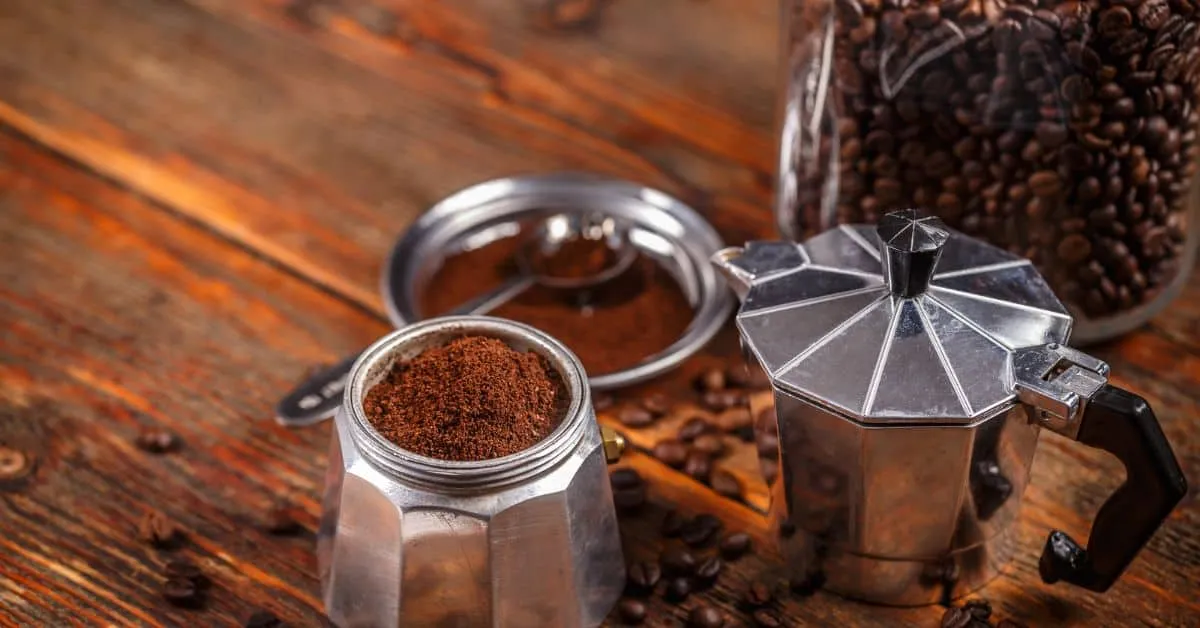
Which is stronger: moka pot or espresso?
Ounce for ounce, espresso is stronger. Pot for shot, a moka pot usually gives you more caffeine, because you drink a lot more of it.
The best data comes from a Swiss lab that brewed nine methods side by side, including a Bialetti moka pot and an espresso machine. Gloess and colleagues found espresso carried the most caffeine per sip, at 21 mg per 10 ml, about 62 mg per ounce.
The moka pot came next. Filter coffee came last, at about 14 mg per ounce.
| Method | Caffeine per ounce | Typical serving |
|---|---|---|
| Espresso | About 62 mg | 1 oz single shot |
| Moka pot | Below espresso, above French press | 1.5 oz per moka “cup”, 9 oz per 6-cup pot |
| Drip / filter | About 14 mg | 8 to 12 oz mug |
The study published exact figures for espresso and filter. The moka pot sits between them on its charts, below espresso and above the French press.
Here’s why both camps on the forums are right. The same study found a 4 oz French press cup carried about the same caffeine as a single espresso. Moka coffee is stronger than French press. So if you drink half a 6-cup pot, about 4.5 oz, you’re getting more caffeine than one shot.
A single shot gives you the punch. A moka pot gives you the dose.
If you’re weighing up a moka pot or French press for a bigger morning mug instead, that comparison has its own caffeine breakdown.
Moka pot vs espresso machine taste
Moka pot: strong, dark and a bit bitter. Heavier than drip coffee, thinner than espresso. It does best with medium and dark roasts. Light roasts tend to come out sour and thin.
Espresso: thick and syrupy, with a layer of crema on top. At its best it’s sweeter and more complex than moka coffee. At its worst, when the grind or dose is off, it’s sour or harsh in a way a moka pot rarely is.
That last point matters if you’re new to this. A moka pot has a narrow range: it makes roughly the same cup every time, good or average. An espresso machine has a much higher ceiling and a much lower floor. Your first month of shots will include some bad ones.
If you drink coffee black and want it to taste like a cafe shot, only the machine gets you there. If you want strong coffee with no learning curve, the moka pot does it.
Moka pot vs espresso machine for lattes
If you mostly drink lattes or cappuccinos, this section should decide it for you.
- Espresso plus a steam wand is the cafe version. You get silky microfoam you can pour, and a shot that cuts through the milk.
- Moka pot plus a frother gets you 2 to 3 oz of strong coffee under 6 to 8 oz of frothed milk. It stands up to the milk fine. You won’t pour latte art with it.
- The coffee flavor does fade more with moka. One roaster’s blog ran the same milk through both and found the espresso’s coffee flavor came through noticeably better. That matches what you’d expect from a thinner, less concentrated brew.
The milk side is something I can speak to. I froth mine with a red Aeroccino 3 every morning, and a frother like that doesn’t care what brewed the coffee underneath. It heats and foams the milk at the press of a button. You won’t get pourable microfoam, but you get a proper foamy latte with no skill involved.
If you drink lattes and don’t care about latte art, a moka pot and a frother get you most of the way for a fraction of the cost.
What each one costs to start
Here’s what each route costs to get going, extras included.
| Moka pot route | Budget machine route | Bambino route | |
|---|---|---|---|
| Brewer | Bialetti Moka Express 6-cup, $52.50 | De’Longhi Stilosa, $149.95 | Breville Bambino, $299.95 |
| Grinder | Not needed, buy moka-ground coffee | Not included, use pre-ground | Optional at first, Smart Grinder Pro $199.95 later |
| Milk | Frother, about $13 for a handheld wand, $30 and up for an electric jug | Built-in steam wand | Built-in steam wand |
| Ongoing | A new gasket now and then | Descaler | Descaler |
| Total to start | About $65 with a wand, $80 and up with an electric frother | About $150 | About $300, or $500 with the grinder |
Prices checked September to October 2026. The Bialetti and the frothers are Amazon prices. The machines and the grinder are list prices from each maker’s US site. Hit the button on each product for today’s number, because they move.
The gap is bigger than it looks. A $50 moka pot does one job well. A $300 machine with a $200 grinder does more, but only pays off if you use it daily and give it a month to learn.
A machine earns its price if you drink espresso or milk drinks most days and want cafe quality. Otherwise, the moka pot is the better buy.
If you’ve decided the machine is worth it, my picks for the best espresso machines for beginners run from $150 to $550 and do the grinder math properly.
Grind size and beans
| Grind | Looks like | Too fine | Too coarse | |
|---|---|---|---|---|
| Moka pot | Fine | Table salt | Chokes the filter, sputters, tastes burnt | Runs fast, tastes thin and sour |
| Espresso machine | Finer, dialed in per bag | Finer than table salt | Shot chokes or drips, tastes bitter | Shot gushes, tastes sour and watery |
Bialetti says to use espresso-ground coffee and fill the basket loosely without pressing it down. That’s the big difference in prep: you tamp an espresso puck hard, and you never tamp a moka basket.
You can buy pre-ground coffee made for a moka pot. illy sells a dedicated moka grind, and Lavazza markets its classic blends for moka pots too. For an espresso machine with a standard basket, pre-ground won’t get you far, which is why the grinder shows up in the cost table.
Roast matters more with a moka pot. Medium to dark roasts hold up to its hot, harsh extraction. The best coffee for moka pots covers five bags that do.
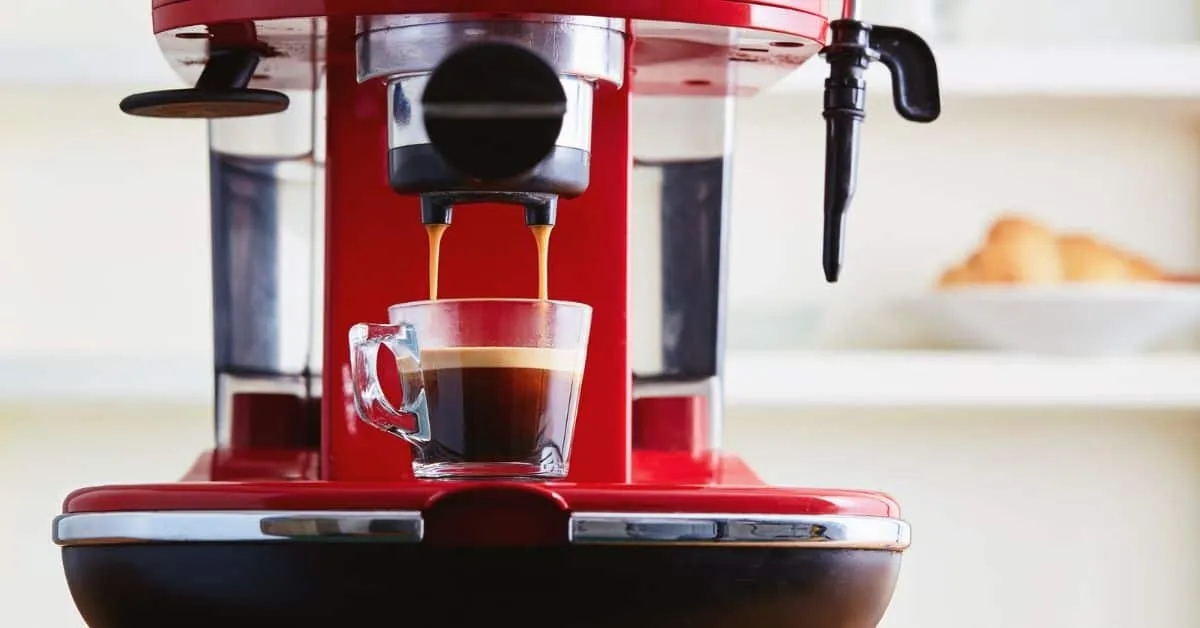
Getting the dose right is the other half. The moka pot coffee ratio goes through it pot size by pot size.
Where Nespresso fits
A Nespresso Vertuo isn’t a 9-bar espresso machine either, and it’s the least effort of the three.
This is my setup, so here’s the first-hand bit. I run a Vertuo Up. My everyday mug is Arondio, and when I want espresso I use Altissio, which makes a 1.35 oz shot.
The Vertuo doesn’t pump water through the coffee at 9 bar. It spins the capsule. A barcode on each one tells the machine what to do, and Nespresso’s Vertuo factsheet says it sets 5 things: cup size, temperature, rotation speed, flow rate and how long the water stays in contact with the coffee.
So here’s how the three line up:
- Moka pot: cheapest, any coffee you like, five minutes at the stove.
- Nespresso: fastest, dead consistent, but you drink Nespresso’s coffee.
- Espresso machine: the real thing and the highest ceiling, but the most money and practice.
As a coffee snob, I know the Vertuo isn’t real espresso. I drink it every morning anyway, because at 6am, easy wins.
FAQs
Is a moka pot better than an espresso machine?
Not better, cheaper and simpler. A moka pot is better value if you mostly drink milk drinks. An espresso machine is better if you want real espresso and will use it every day.
Can a moka pot make crema?
No. You might see a thin layer of foam as it brews, but real crema needs about 9 bar of pressure, and a moka pot runs at a few.
How many espresso shots are in a moka pot?
A 6-cup Bialetti makes about 9 oz, which is six moka “cups” of roughly 1.5 oz. Each one is weaker than an espresso shot ounce for ounce, so treat a moka cup as close to a shot, not equal to one.
Can you use espresso coffee in a moka pot?
Yes. Bialetti tells you to use espresso-ground coffee. Just fill the basket level and don’t press it down, or the water struggles to get through and the pot sputters.
The short version
Get a moka pot if you want strong coffee for milk drinks, don’t want a learning curve, and don’t want to spend more than $50. Get an espresso machine if you want real espresso with crema, drink it daily, and are happy to spend a month and a few hundred dollars getting good at it.