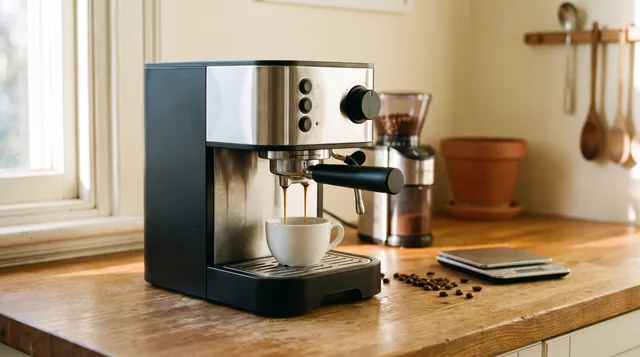
A grand buys you a serious espresso machine. It also buys you a decent espresso machine and a grinder that actually works, which will make better coffee. Most people should take the second option.
Straight up, before we go further: I pull my daily shots on a Nespresso Vertuo. I have not had all six of these machines on my kitchen counter and I’m not going to pretend otherwise. What follows is built from spec sheets, a few hundred owner reports, and the reliability threads where people talk about what actually broke in year three. If you want tasting notes from someone who borrowed a machine for a week, there’s no shortage of those already.
Here’s the short version. The Breville Barista Pro is the best single-box buy under $1000. The Bambino Plus paired with a separate grinder makes better espresso for less money. The Gaggia Classic Pro E24 is the one to buy if you want to learn properly and tinker forever.
The picks at a glance
- Best ValueCheck Price
Small, fast and cheap enough to leave real money for a grinder
- Best for EnthusiastsCheck Price
Italian-made prosumer machine with commercial steam wand and 58 mm portafilter
- Best Build QualityCheck Price
Commercial group head and brass boiler built to be repaired, not replaced
- Best HybridCheck Price
DeLonghi La Specialista Prestigio
Built-in grinder with dose control and a semi-automatic milk wand
- Best Bean to CupCheck Price
Bean-to-cup convenience for people who want a button, not a portafilter
| Machine | Price | Grinder | Milk | Best for |
|---|---|---|---|---|
| Breville Barista Pro | ~$850 | Built in | Manual wand | Best overall |
| Breville Bambino Plus | ~$450 | None | Auto wand | Best value |
| Gaggia Classic Pro E24 | ~$550 | None | Commercial wand | Learning and modding |
| Rancilio Silvia | ~$995 | None | Commercial wand | Build quality |
| DeLonghi La Specialista Prestigio | ~$900 | Built in | Semi-auto wand | Best hybrid |
| DeLonghi Magnifica Evo | ~$740 | Built in | Automatic | Best bean to cup |
Prices checked September 2026. Check the current number before you buy, because they move.
Spend it like this, not like that
This is the part every other guide skips, and it matters more than which machine you pick.
Espresso needs a grind that’s fine enough and consistent enough to build about 9 bars of resistance in the basket. A blade grinder can’t do that. Neither can a $50 burr grinder. The particles come out uneven, water carves a channel through the puck and races out the bottom, and your shot runs sour and thin no matter what you paid for the machine pushing the water.
So the machine is only half the purchase. Here’s what the same money buys depending on how you split it:
- Machine
- Grinder
- Accessories
- The value build$700
Bambino Plus, Smart Grinder Pro, tamper and scale
Best coffee per dollar
- The learner's build$980
Gaggia Classic Pro E24, DF54, bottomless portafilter and baskets
Upgradeable for a decade
- The one-box build$850
Barista Pro, grinder built in
Simplest, one appliance
- The mistake$1,045
Rancilio Silvia and whatever grinder the budget has left
Costs the most, tastes the worst
Three of those splits work. Here they are in detail:
The value build, about $700. Bambino Plus at ~$450, a Breville Smart Grinder Pro at ~$200, and $50 for a tamper and a scale. Best coffee per dollar on this page, and you keep $300 in your pocket.
The learner’s build, about $980. Gaggia Classic Pro E24 at ~$550 and a DF54 single dose grinder at ~$230, with $200 left for a bottomless portafilter and a decent basket. Slower, hotter, entirely manual, and you can keep upgrading it for a decade.
The one-box build, about $850. Barista Pro. The grinder inside it is good rather than great, and if it dies the whole unit goes in for service. You’re paying for one appliance on the counter instead of two, which is a completely reasonable thing to want.
The blunt version: a $995 Rancilio Silvia with a $50 blade grinder makes worse espresso than a $450 Bambino Plus with a $200 burr grinder. If you take one thing from this page, take that.
Getting the grind right is its own skill, and it’s worth reading up on how to calibrate and adjust your grinder before you blame the machine.
Breville Barista Pro: best espresso machine under $1000 overall
Best for: someone who wants one appliance that does the whole job, today, without a research project.
- ThermoJet heating element reaches brew temperature in about 3 seconds
- Integrated conical burr grinder with 30 grind settings
- PID temperature control with a digital display
The Barista Pro is the Barista Express with the annoying parts fixed. The ThermoJet heating element gets to brew temperature in about three seconds instead of the thirty-odd the Express needs, there’s a proper PID holding the temperature steady, and the digital display tells you what the machine is actually doing instead of making you guess from a needle.
The built-in conical burr grinder has 30 settings and doses straight into the portafilter. For medium roasts it’s genuinely fine.
What’s annoying about it. The portafilter is 54mm, which is Breville’s own size rather than the 58mm commercial standard, so your choice of baskets and bottomless portafilters is narrower and pricier. Some of the portafilter fittings are plastic on an $850 machine, which stings. The built-in grinder struggles at the fine end with light roasts. And because everything lives in one housing, a grinder fault means the whole machine goes away for repair.
Realistic spend: $850, done. Add a scale and a tamper if you want to be precise about it.
Breville Bambino Plus: best value
Best for: anyone willing to have two things on the counter in exchange for better coffee and a smaller bill.
- ThermoJet heating element reaches brew temperature in about 3 seconds
- Automatic milk texturing with adjustable temperature and foam level
- Compact footprint, roughly 7.7 inches wide
The Bambino Plus is about 7.7 inches wide, heats in three seconds, and has an automatic milk wand that textures to a temperature and foam level you set. That auto wand is better than most people’s manual technique, which is the whole point of it.
There’s no grinder, and that’s the feature. At ~$450 you have $200 to $250 left for a real one, and that combination beats every all-in-one on this list for what ends up in the cup.
What’s annoying about it. The automatic milk wand takes the skill away as well as the effort, so if you want to learn latte art you’ll be fighting it. The water tank is small and you’ll refill it often. There’s no pressure gauge, so you’re diagnosing shots by taste and timing alone. It’s light enough that pulling the portafilter out can shift the machine on the counter.
Realistic spend: $450 machine plus $200 grinder, so about $700 all in.
Gaggia Classic Pro E24: best for learning
Best for: the person who wants to actually understand espresso and doesn’t mind that the machine makes them work for it.
- Made in Italy, brews at the optimal 9 bars
- Commercial steam wand for milk texturing
- Heavy-duty 58 mm portafilter with single, double, and ESE baskets
The Gaggia Classic Pro E24 has a commercial 58mm portafilter, a three-way solenoid valve that dumps pressure and leaves you a dry puck, and brass and steel where the water actually goes. It’s made in Italy and it’s built to be opened up. The E24 is the version Gaggia North America sells now, from $549.
That last part is the real argument for it. There’s a large, active modding community: PID kits, OPV adjustment, silvia-style steam wands, bottomless portafilters. A Gaggia you buy today can be a meaningfully better machine in three years for another $150.
What’s annoying about it. Single boiler, so you brew, then wait for it to come up to steam temperature, then steam. That wait is genuinely irritating if you’re making three flat whites. No PID out of the box, so temperature control means learning to time your shots around the heating cycle. Five-plus minutes to warm up properly. The steam wand is stiff and awkward until you get used to it. And don’t pay extra for a newer name: each version of the Classic Pro has changed only a little from the one before.
Realistic spend: $550 machine plus $230 grinder, so about $780, with room for mods later.
Rancilio Silvia: best build quality
Best for: someone who already owns a good grinder and wants a machine that outlives the decade.
- Commercial 58 mm portafilter and chrome-plated brass group head
- Brass boiler with stainless steel body panels
- Parts availability that keeps decade-old machines running
The Silvia uses the same 58mm portafilter and chrome-plated brass group head that Rancilio puts in commercial machines, sat on a brass boiler in a steel body. People are still running fifteen-year-old Silvias because parts are available and the thing is designed to be repaired rather than binned.
What’s annoying about it, and why most people shouldn’t buy it. At ~$995 it eats your entire budget, which leaves nothing for the grinder that a machine this good absolutely requires. There’s no PID and no pressure gauge, so temperature management means “temperature surfing”, a technique involving flushing water and watching a light that you will have to learn from YouTube. It’s heavy, it takes a long time to warm up, and it’s unforgiving of a bad grind.
Buy this one if you already have a $400 grinder on the counter. Otherwise the money is better split.
Realistic spend: $995, and you’re not done.
DeLonghi La Specialista Prestigio: best hybrid
Best for: someone who wants a portafilter in their hand but wants the machine to help.
- Integrated conical burr grinder with sensor dose control
- Active temperature control between shots
- Semi-automatic milk frother with manual and auto modes
The La Specialista Prestigio sits between the guided and the manual camps. The built-in grinder has sensor dose control so it stops when the basket is full, there’s active temperature control between shots, and the milk frother runs in manual or automatic mode depending on whether you feel like practicing.
What’s annoying about it. The portafilter is 51mm, the smallest of the three common sizes, which limits your accessory options more than Breville’s 54mm does. The grinder can’t go fine enough for lighter roasts, so you’re steered towards medium and dark. And at ~$900 there’s more plastic in the build than the price suggests.
Realistic spend: $900, done.
DeLonghi Magnifica Evo: best bean to cup
Best for: the person who wants coffee at 6am and does not want a hobby.
- One-touch drinks with an integrated burr grinder
- LatteCrema automatic milk system
- Removable brew unit that rinses under the tap
Not everyone reading this wants to learn to tamp. The Magnifica Evo grinds, doses, tamps, brews and froths from one button, and the brew unit pops out to rinse under the tap.
Be clear about the trade. Bean-to-cup machines make convenient coffee, not great espresso. You get no control over dose, tamp pressure or yield, which are three of the four things that determine how a shot tastes. There are far more moving parts than a semi-automatic, so there’s more to break, and servicing one costs real money. The milk carafe needs cleaning constantly or it turns on you.
If you know you want convenience, this is an honest and good version of it. Just don’t buy it expecting café shots.
What $1000 actually buys you
What you get: proper temperature stability, usually via PID. A real steam wand with enough pressure to texture milk. Metal in the places that matter. A machine that can be serviced instead of thrown away. And, on the semi-automatics, enough control to keep improving your shots for years.
What you don’t get: a dual boiler, so no brewing and steaming at the same time. No saturated group head, no E61, no plumbed-in water line. No commercial-grade shot-to-shot consistency when you’re making six drinks in a row.
Worth saying plainly: the jump from a $200 machine to a $500 machine is much bigger than the jump from $500 to $1000. The first buys you real pressure, a real portafilter and temperature you can trust. The second mostly buys you convenience, build quality and time saved.
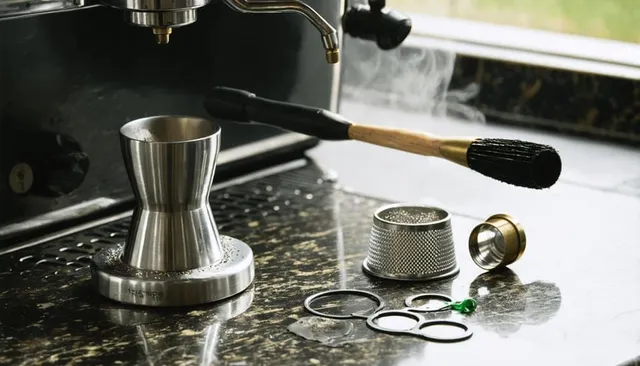
Running costs. Beans are the big one at $15 to $25 a bag. Then descaler, water filters, and gaskets that want replacing every year or two. Budget a little for descaling and cleaning, because a neglected machine is a broken machine.
How to choose
Four decisions. Answer these and the machine picks itself.
Do you want to learn, or do you want a button?
Semi-automatics like the Gaggia, Silvia and Bambino hand you control and expect you to use it. Bean-to-cup machines like the Magnifica hand you coffee. Neither answer is wrong, but pretending you’ll enjoy the learning curve when you won’t is how $900 machines end up on Craigslist.
Built-in grinder or separate?
Separate wins on grind quality, on repairability, and on your upgrade path. Built-in wins on counter space and total price. My pick is separate, every time, because the grinder is the part that most determines how the coffee tastes and you don’t want it welded to the thing that might break.
51mm, 54mm or 58mm?
Almost nobody explains this and it matters.
- 51mm
DeLonghi La Specialista
Fewest accessories
- 54mm
Breville Barista Pro, Express, Bambino
Well supported
- 58mm
Gaggia, Rancilio, most prosumer
Everything fits
58mm is the commercial standard, so baskets, tampers, distribution tools and bottomless portafilters are everywhere and cheap. 54mm is Breville’s size, well supported but narrower. 51mm, which is what the La Specialista uses, is the most limiting of the three.
The sizes are closer than you’d think, but they’re not interchangeable, and the accessory you want in a year may only exist for one of them. Know which you’re buying into.
How much milk do you actually steam?
If you drink straight espresso, single boiler versus dual boiler is irrelevant to you. If you make several flat whites or cappuccinos each morning, the wait between brewing and steaming on a Gaggia or Silvia will grate on you within a week. Be honest about your actual routine, not your aspirational one.
Frequently asked questions
Is an espresso machine under $1000 worth it over a $200 one?
Yes, but not for the reason people expect. The extra money buys temperature stability, a steam wand that works, and a machine that lasts. What it doesn’t fix is a bad grind. A $900 machine with a cheap grinder will disappoint you.
Do I need a separate grinder?
Unless you buy an all-in-one, yes. And even with an all-in-one, a separate grinder in the $200 to $250 range will usually out-grind the one built into a $850 machine. Pre-ground coffee is not an option for espresso, because it’s stale and too coarse within days of grinding.
Can you get real espresso for under $1000?
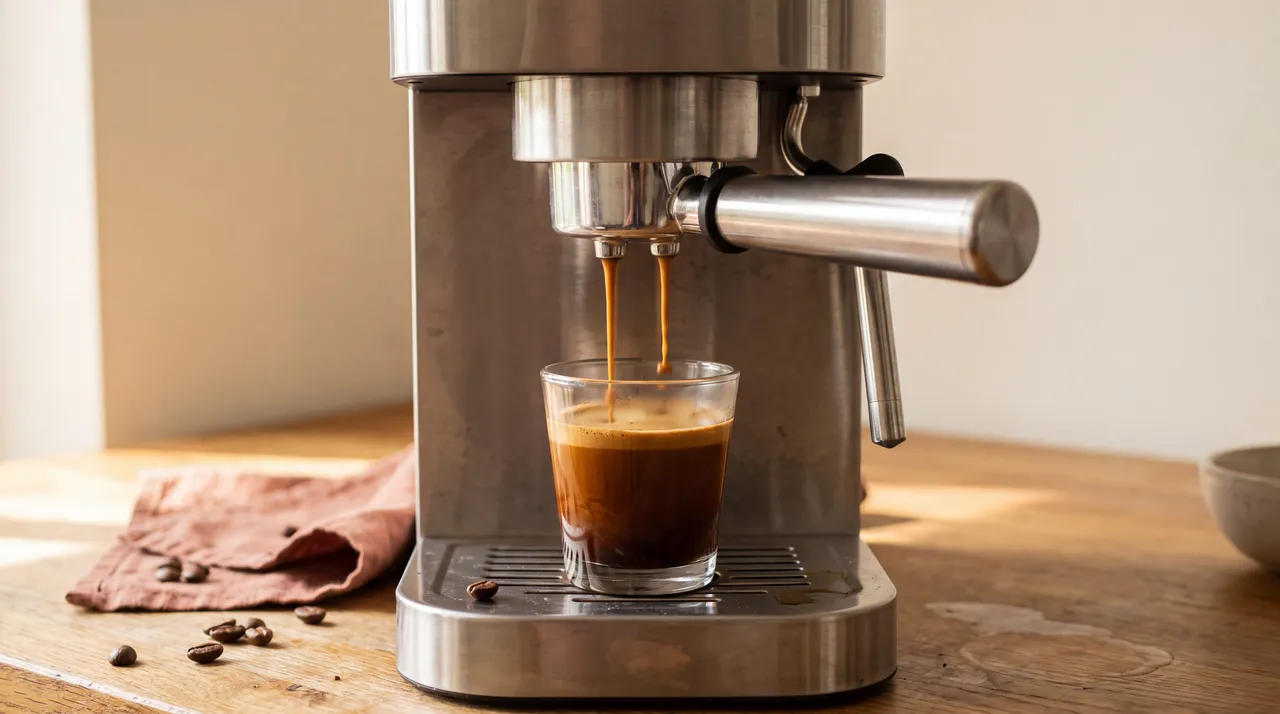
Yes. Proper 9 bar extraction, real crema, shots that stand up in milk. What you can’t get at this price is commercial consistency, shot after shot after shot, with no thought required.
How long will one of these last?
Five to ten years with regular descaling. The Gaggia and the Silvia will go longer because parts are available and they’re built to be opened. Bean-to-cup machines tend to be the shortest-lived, because there’s more to fail and repairs get expensive fast.
Is the Breville Barista Express still worth buying?
It’s still a good machine and it’s usually $150 cheaper than the Pro. The Pro gets you the three-second heat-up, PID, and a better display. If you find the Express heavily discounted, take it. At full price, the Pro is the better buy.
The verdict
For most people: the Breville Barista Pro. One box, three-second heat-up, no decisions to make, good coffee.
For anyone who’ll take slightly more effort in exchange for better coffee and $150 back: the Bambino Plus with a Breville Smart Grinder Pro. This is the build I’d recommend to a friend.
For the tinkerer: the Gaggia Classic Pro E24, which will still be on your counter in ten years, modded half to death.
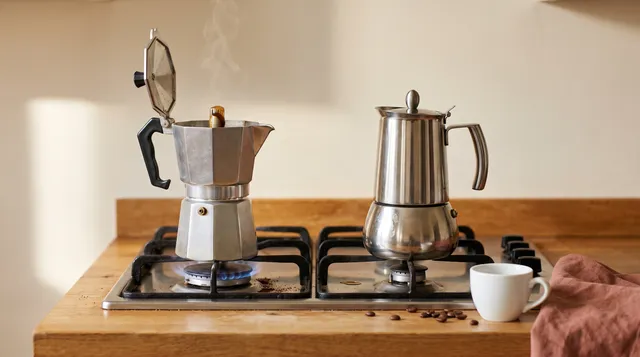
And if you’re brand new to this, buy the cheaper machine and the better grinder, then spend the difference on beans worth grinding and store them properly. If you’re still not sure you want a machine at all, a cheaper moka pot route makes a strong case for itself first.
Buying your first machine and want to spend less? Start with the best espresso machines for beginners.