Out of espresso powder mid-recipe? The best espresso powder substitute is instant coffee, at 1.5 teaspoons for every 1 teaspoon of powder. Ground coffee is not a substitute. It will not dissolve, and it leaves grit in the batter.
Below is the full ratio table, what to reach for in each kind of recipe, what works if you want no coffee flavor at all, and how to make your own powder in an afternoon.
Espresso powder substitutes and how much to use
| Substitute | For 1 tsp espresso powder | Best in | Watch for |
|---|---|---|---|
| Instant espresso powder, another brand | 1 tsp | Anything | Nothing. It is the same product |
| Instant coffee granules | 1.5 tsp, crushed to a powder first | Brownies, cakes, cookies, frostings | More bitter than espresso powder. Crush it or you get specks |
| Brewed espresso, cooled | 1 tbsp, and take 1 tbsp out of the recipe’s other liquid | Batters and custards | Forget the subtraction and the batter runs thin |
| Strong brewed coffee, cooled | 2 tbsp, and take 2 tbsp out of the recipe’s other liquid | Brownies, chocolate cake | Weakest option here. Brew it double strength |
| Espresso beans ground to dust | 1/2 tsp | Wet batters with a long bake only | Never fully dissolves. You are trading flavor for texture |
| Coffee extract | 1/2 tsp | Frostings, whipped cream, no-bake desserts | Sweetened versions throw off the sugar |
| Dutch-process cocoa powder | 1 tsp plus a pinch of salt | Chocolate recipes where you want zero coffee | Deepens the chocolate. Does not taste like coffee |
- 100% coffee, dark roast, brewed and then dried so it dissolves straight into batter
- DeLallo's own guidance is 1/2 to 2 teaspoons per recipe for richness, more for a mocha flavor
- Glass jar keeps it dry, and sealed powder stays usable for around two years
Pros
- Dissolves without clumping, unlike crushed instant coffee granules
- Less bitter than instant coffee, so it deepens chocolate instead of fighting it
- Kosher, vegan, gluten free and non-GMO, which covers most baking requests
Cons
- Sold here as a 3 pack, which is a lot of powder if you bake twice a year
- 1.94 oz jars are small, so cost per ounce is higher than a bulk tin
- Costs more than the instant coffee already in your cupboard
Straight up, before you act on any of that: I am a coffee snob, not a baker. I pull my daily shots on a Nespresso Vertuo and the closest thing I own to a stand mixer is an Aeroccino. I have not split a brownie tray to test all seven of these and I am not going to pretend otherwise.
The numbers come from three places:
- Manufacturer guidance. The firmest of the three.
- The ratio bakers keep landing on in recipe threads. Sentiment rather than fact, but it is consistent sentiment.
- The one thing everyone agrees on. Instant coffee is more bitter than espresso powder, so you use less of it than you would guess.
DeLallo, who make the stuff, warn that doubling the instant coffee makes baked goods taste “overly bitter or tinny”. That is why the table says 1.5x and not 2x.
Taste the batter. It is the only test that counts.
Can you use ground coffee instead of espresso powder?
No. Not as a straight swap, and this is the one substitute where the honest answer is a flat refusal.
Espresso powder has already been brewed. The National Coffee Association describes the process plainly: beans are roasted and brewed much stronger than you would drink, then that concentrate is either freeze dried at -40°C or sprayed into hot air to leave crystals behind.
Add water and the coffee goes back into solution. Nothing is left over.
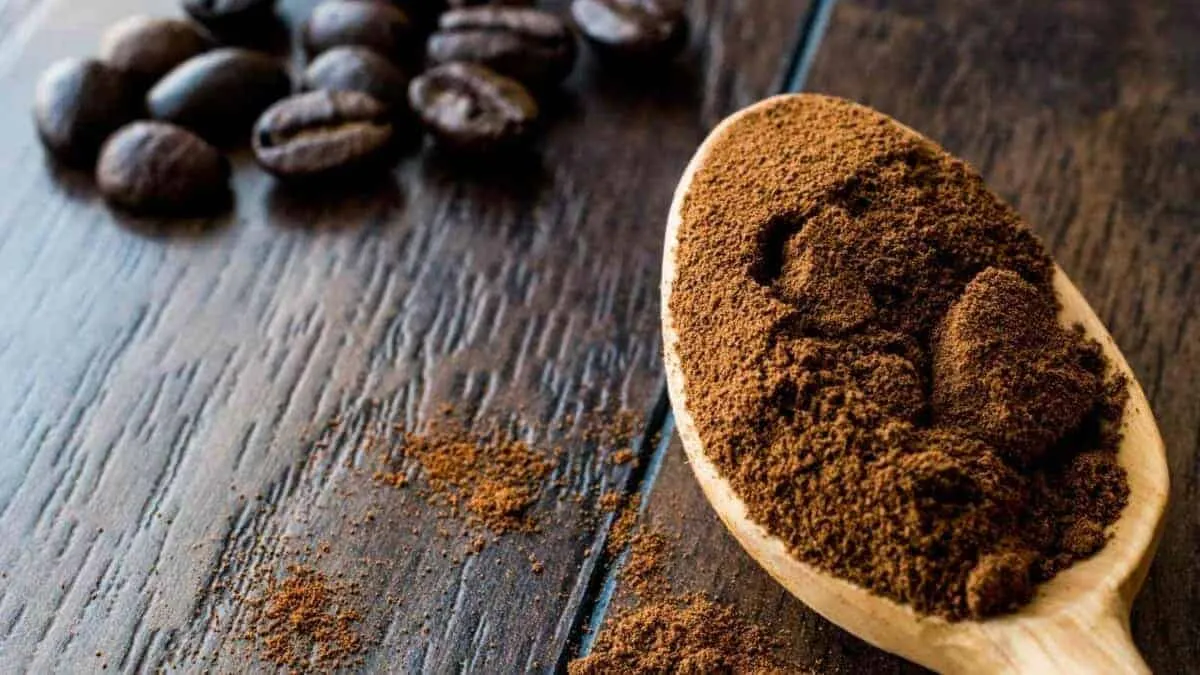
Ground coffee has never been brewed. It is roasted bean, chopped up, so the flavor is still locked inside the particles and the particles stay particles.
Stir a teaspoon into brownie batter and you have not added coffee flavor. You have added sand.
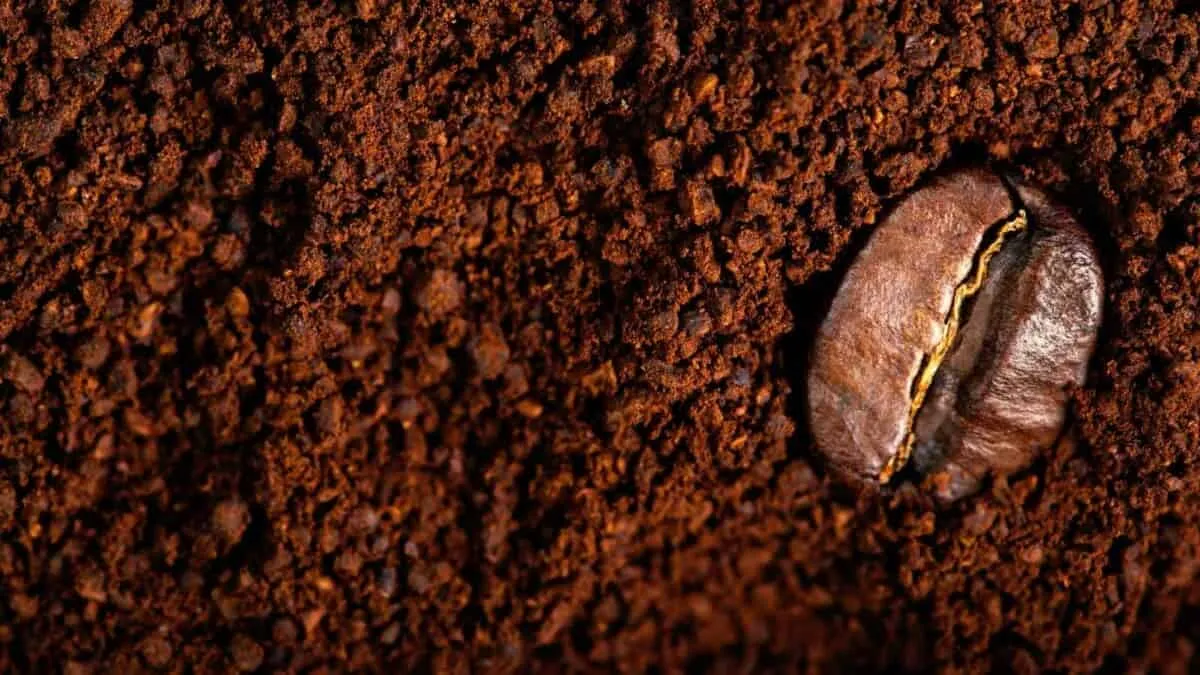
There is one workaround and it is a compromise. Grind the coffee to a genuine dust, finer than you would for espresso, and use it only in a wet batter with a long bake so the particles have time and moisture to soften.
Half a teaspoon, no more. You will still feel it on your tongue.
If you do not own a grinder that fine, there are a few ways to grind coffee beans without a grinder that get you closer than a knife and a chopping board.
Espresso powder vs instant coffee
These two are cousins. Same manufacturing process, different inputs and different output.
| Espresso powder | Instant coffee | |
|---|---|---|
| Starts as | Espresso-roast beans, brewed very strong | Regular roast, brewed strong |
| How it is dried | Brewed then dried to crystals | Freeze dried or spray dried |
| Particle size | Finer, milled to a powder | Coarser granules |
| Bitterness | Lower | Higher |
| Dissolves | Instantly, including into batter | Fast in hot liquid, slower cold |
| Price per ounce | Higher | Lower |
| Swap ratio | Use 1.5 tsp instant coffee per 1 tsp powder | Use 2/3 tsp powder per 1 tsp instant coffee |
Both carry real caffeine. A teaspoon spread across a 9x13 pan is not much per square, but it is not zero, which matters if you are baking for kids. For context, the FDA cites 400mg a day as an amount not generally associated with negative effects in healthy adults, and a pan of brownies will not get you anywhere near it.
What espresso powder actually is
It is coffee that has already been made. DeLallo describes their own product as espresso beans that are “brewed and then dried to become a powder”, which is the whole thing in eight words.
That pre-brewing is what makes it useful in a kitchen. Because the coffee was extracted with water and then had the water taken away, adding liquid puts it straight back.
It dissolves into melted butter, into batter, into a chocolate ganache. No grounds to strain, no brewing step, no extra liquid to account for.
It is also why it is not ground coffee, and why no amount of grinding turns one into the other.
Substitutes by recipe
Brownies and chocolate cake. The easiest recipes to substitute in, because there is already liquid you can play with. Instant coffee at 1.5x is the simplest fix. Two tablespoons of cooled double-strength coffee works too, as long as you pull two tablespoons out of the milk or water the recipe calls for.
Cookies. Dough is dry and there is nowhere for extra liquid to go, so keep the substitute dry too. Instant coffee crushed to a powder, or a little Dutch-process cocoa.
Do not pour brewed coffee into cookie dough and expect it to behave.
Frostings, buttercream and no-bake. Nothing is going to bake out the graininess here, so texture is everything. Coffee extract at half a teaspoon, or instant coffee dissolved in a teaspoon of warm cream first, then folded in. Never straight granules.
Tiramisu. This one is not a substitution problem. The recipe calls for actual brewed espresso to soak the ladyfingers, and powder stirred into hot water is a reasonable stand-in for the soak but a poor one for flavor. If you have no machine, there are several ways to brew real espresso without a machine that will get you a better result.
Anything chocolate and coffee together. A mocha is the drinkable version of the same trick, and the reason it works is identical: coffee makes chocolate taste more like chocolate. If you want the drink rather than the dessert, here is the difference between a latte and a mocha.
Caffeine-free substitutes for espresso powder
Nobody covers this properly, so here it is.
Decaf instant coffee is the closest thing by a mile. Same texture, same behavior, same 1.5x ratio, almost none of the caffeine. USDA lists a rounded teaspoon of decaffeinated instant coffee powder at about 2mg of caffeine.
Dutch-process cocoa powder at 1 tsp with a pinch of salt does the job espresso powder is usually hired for, which is making chocolate taste deeper.
Chicory or roasted dandelion root are dark and slightly bitter and behave like a powder in batter.
Say it plainly: none of these taste like coffee. They deepen and round out chocolate. If the recipe wanted coffee flavor specifically, decaf instant is your only real option.
How to make espresso powder at home
Worth doing if you already have espresso-roast beans and no jar in the cupboard.
- Brew it strong. A shot or two at roughly twice the concentration you would drink.
- Spread it thin on a parchment-lined tray.
- Dry it low. The extension service’s oven-drying guidance for fruit and vegetables is the right ballpark: 140 to 150°F, door propped 2 to 4 inches open so moisture can escape. Expect several hours, since an oven takes two to three times longer than a dehydrator.
- Grind it in a spice grinder or a mortar once it snaps rather than bends, then store it airtight.
Do not turn the heat up to speed it along. You will dry the outside and leave the middle wet, which is called case hardening, and it is how the result goes mouldy in the jar.
FAQs
Can you substitute espresso powder for instant coffee?
Yes, and this direction is easier than the other. Use about 2/3 teaspoon of espresso powder for every 1 teaspoon of instant coffee, since the powder is less bitter and more finely milled.
Is espresso powder the same as instant espresso?
Yes. The two names describe the same product. Jars are labelled “instant espresso”, “instant espresso powder” or “espresso powder” and you can treat them as interchangeable at 1:1.
How much espresso powder equals one shot of espresso?
DeLallo’s own instruction is 1 tablespoon of powder to 4 tablespoons of hot water for a shot-strength result. Scale that down and 1 teaspoon of powder is worth roughly a tablespoon of brewed espresso.
Will espresso powder make my brownies taste like coffee?
At a teaspoon or two, no. It makes the chocolate taste stronger and slightly less sweet. DeLallo’s own instruction is 1/2 to 2 teaspoons for richness, and more than 2 teaspoons if you want an actual mocha flavor, which is the line to stay under.
What happens if I leave espresso powder out entirely?
The recipe still works. Chocolate desserts come out flatter and sweeter, and nothing else changes. It is a flavor enhancer, not a structural ingredient, so skipping it costs you depth rather than a failed bake.
The short version
Instant coffee at 1.5x covers most of what you will ever bake. Brewed coffee works when the recipe has liquid you can trade away. Ground coffee does not work at all, and no amount of grinding fixes that.
If you bake with chocolate more than a few times a year, buy a jar. It keeps for around two years sealed, which is longer than whole beans stay worth drinking by a wide margin.